On page 23 Ghada Karmi discusses the Caftan, "No one then could have known that after the loss of Palestine in 1948, this despised peasant costume would become a symbol of the homeland, worn with pride by the very same women who had previously spurned it."
For those who are unaware, this is what a caftan looks like.
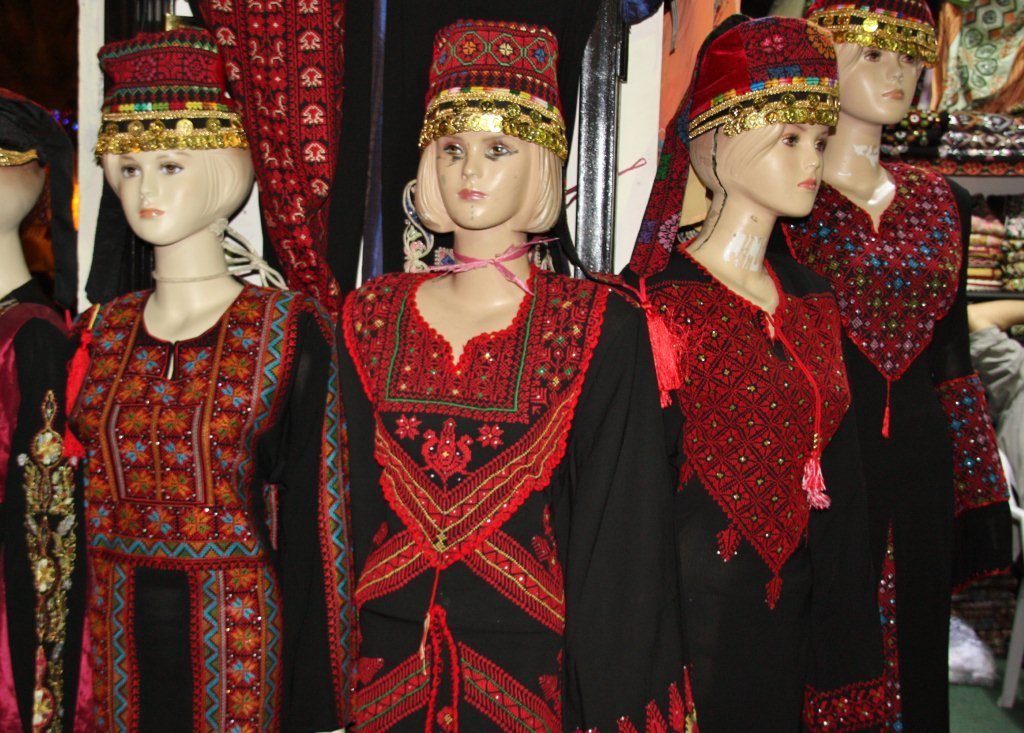
N.d. Photograph. Arabic Zeal. ArabicZeal.com. Web. 7 Mar. 2014.
This made me want to know more about the craftspersonship, origins, and possible meanings of caftans.
According to Wikipedia, the caftan is a coat, or in this case, and overdress that buttons in the front. It is long-sleeved and it reaches to the ankles. Apparently, it originated in Mesopotamia, which means that the caftan has a long history. Since then, it has become a highly fashionable style of dress which is worn in many cultures. Traditionally, the caftan was worn by both men and women.
I find it funny that Ghana's mother found the caftan to be so plain, because only a while later the caftan became the height of fashion, being sported by celebrities such as Elizabeth Taylor and Grace Kelly.
The caftan is still highly fashionable today, and it probably will be in the future, as it has survived since 600 BCE. The history of the caftan is as interesting and beautiful as the caftan itself.
I find it funny that Ghana's mother found the caftan to be so plain, because only a while later the caftan became the height of fashion, being sported by celebrities such as Elizabeth Taylor and Grace Kelly.
The caftan is still highly fashionable today, and it probably will be in the future, as it has survived since 600 BCE. The history of the caftan is as interesting and beautiful as the caftan itself.

This comment has been removed by the author.
ReplyDeleteThere seems to be so much history behind traditional Palestinian garments, and I wanted to know more about it. Here are some other types of clothing from around Palestine.
ReplyDeleteThe different articles of clothing worn around Palestine represent where the person is from, be them a villager or Bedouin (nomad) or townsperson. In addition, they represent the marital status of the person and reflect the time period.
Women traditionally either wear coats over pants and shirts or wear a throbe, a long shirt, with a veil, which usually hangs down their backs. While clothing is influenced by geography, class, locality, and religion, all women wear girdles, although they vary depending on the area. Northern Palestinian village women wore brightly colored coats that could either be plain (dura`ah) or ornamented (jillayeh). These were replaced in the 1950's by the qumbaz, a different style of coat with long sleeves and long side slits, and are worn over a short sleeved shirt (quamis) and ankle-length pants (elbas or sirwal), which were traditionally tight-fitting. Turkish influences integrated looser-fitting pants into Palestinian clothing as well. Married women wear headscarves (hattah) or trains (zurband), and are held in place with a headband. Northern Bedouin women wear a blue or black throbe or shirsh, which have long, tight sleeves and a long neck opening and are decorated with embroidery. Their headdresses are dark blue or black veils. In Southern Palestine, village women wore throbes or jillayeh, with decorations that varied with every region. In addition, festive dresses are also a part of Palestinian culture, and are embellished with embroidery, patchwork, appliqué, and trim. The most distinctive feature of these dresses is the chest panel. Southern Bedouin women's clothing is similar to that of villagefolk, but the throbes are more voluminous and have winged sleeves, which narrowed by the 1960's. These throbes were embroidered in a cross-stitch pattern, and is usually red for women and blue for unmarried girls, and were often much longer than the woman and were hitched up to create layers and the sleeve was used to create a veil. In some parts of Palestine, married women and widows wear a tarbush shaped hat covered in coins (shatweh). While to the north they wear a coin covered bonnet (smadeh) and another horseshow shape with more coins (saffeh).The unmarried village girls wear a bonnet (malas). In some areas when the girls reach marriageable age they switch to a wuqa, which is like a simple version of the smadeh - basically a bonnet with a few coins.
Men's clothing is much more simple than women's. the most basic garment is the throbe, which is like a long shirt. Working men wore them tucked up with a leather belt, and upper class men let it hang loose. After World War I, however, throbes were replaced by European styled white qamis. They also wore a range of overcoats and Turkish qambaz, or pants. As European influence spread, wearing trousers became popular around Palestine except for the Bedouin men. Before the 1930's, men wore three layers of headwear: a white cotton skull cap (taqiyeh), a white or grey felt cap (libbadeh or kubb`ah), and then a soft, rounded tarbush maghribi with a tassel. Urban men and Ottoman officials wore tarbush istanbuli, which were tall and stiff. The tarbush represented the man's background: green meant he was a descendent of the prophet Muhammad, red meant he was a Samaratin, and black meant he was a Jew. The most common colors, however, were brown, yellow, orange and, amongst older men, white. After the 1930's, however, villagemen started wearing the Bedouin keffiyeh as a symbol of nationalism. After 1967 Arafats's black and white keffiyeh adopted widely.
It is truly amazing what clothing can do.
Soruce: "Palestinian Traditional Clothing." Raqs.co.nz. N.p., n.d. Web. 11 Mar. 2014.
I as well found this topic interesting, In the book, Ghada describes Fatima's caftan as "a badge of her peasant identity and as much part of her as the colour of her eyes. To wear Fatima's clothes would have been as unthinkable as becoming Fatima herself." (page 23)
ReplyDeleteAccording to Dictionary.com, a caftan is "1. a long garment having long sleeves and tied at the waist by a girdle, worn under a coat in the Middle East.
2. a long, full, usually collarless robe with wide sleeves that is worn at home for lounging or entertaining or at the beach as a cover-up."
"Caftan." Dictionary.com. Dictionary.com, 2014. Web. 12 Mar. 2014.
The part about the caftan was very intresting as when Ghada says that "At the time of my childhood in Jersalem, no woman who was not a pesant would be seen dead in a caftcan," but than it becomes a symbol of Palistine and is people's freedom. But its intresting on how many types of clothing use the same word or style: Ottoman sultans would dress in the robes given to them as gifts, or of a present of victory; the morroco caftan or Takshita is like the Arabian of put can be worn by men; and other countries use the word or style as well, the russins have a mens suit that many merchants wear and south east asian people wear them in csaual warm attire.
ReplyDeletehttp://en.wikipedia.org/wiki/Kaftan
Delete